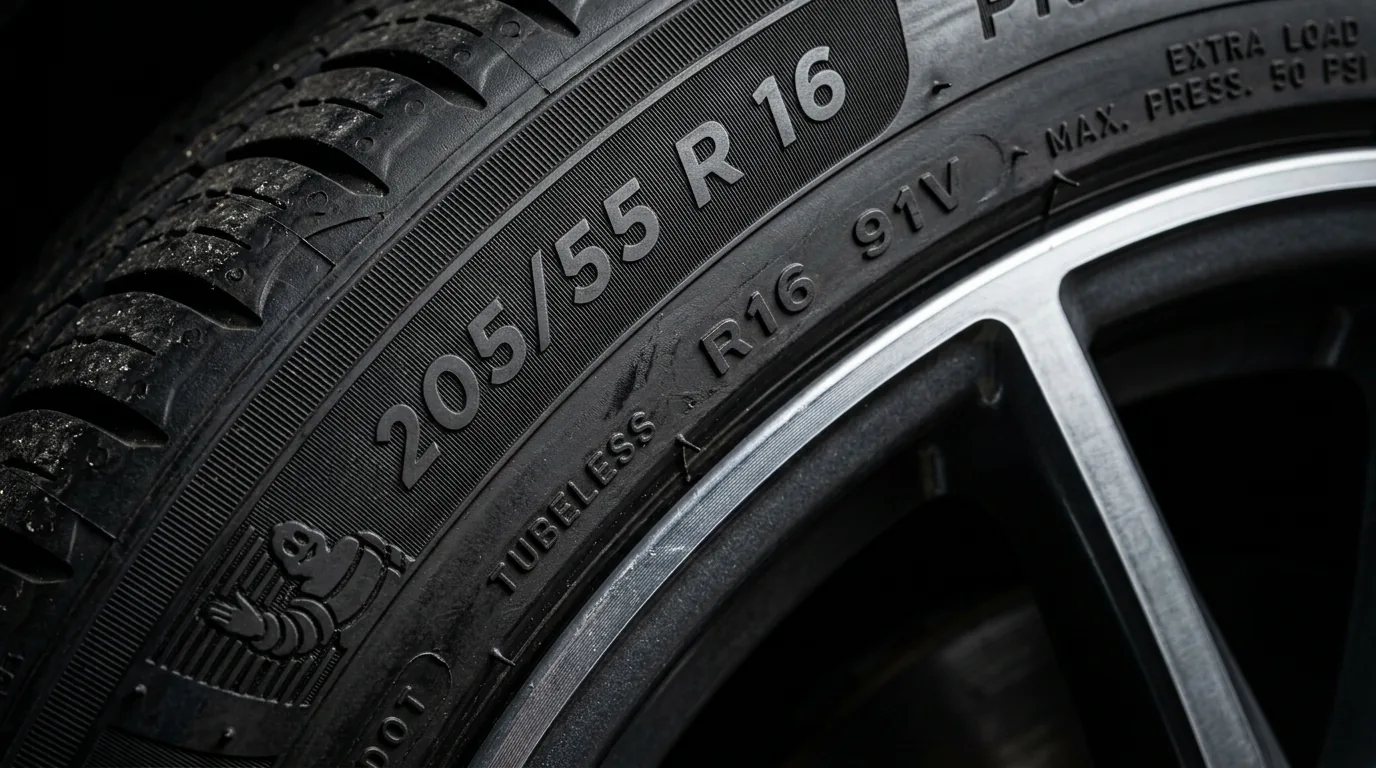
Jak odczytać rozmiar zapisany na boku opony?
Every tire has a code stamped right on its side. This is the rozmiar opony, and it tells you everything: width, height, and rim fit. Learning jak odczytać rozmiar opony is the first real step toward smart tire shopping.
The specyfikacja opony usually looks like this: 205/55 R16. It seems random at first. But each part has a job. Understanding this oznaczenie opony saves you money and keeps you safe on the road.
Co oznaczają liczby w oznaczeniu 205/55 R16?
So, co oznacza 205 55 R16? Simple. The 205 is szerokość opony in millimeters. The 55 is profil opony, meaning sidewall height as a percentage of width. The R stands for konstrukcja radialna. The 16 is rozmiar felgi in inches.
| Code Part | Meaning | Example Value |
|---|---|---|
| 205 | Szerokość opony (mm) | 205mm wide |
| 55 | Profil opony (%) | 55% of width |
| R | Konstrukcja radialna | Radial build |
| 16 | Rozmiar felgi (inches) | 16-inch rim |
Jak obliczyć szerokość, profil i średnicę opony?
Now let's get into obliczanie rozmiaru opony. This part isn't scary math. It's just multiplication. Once you know the formula, you can check any tire size in seconds, right from your phone or a kalkulator rozmiaru opon.
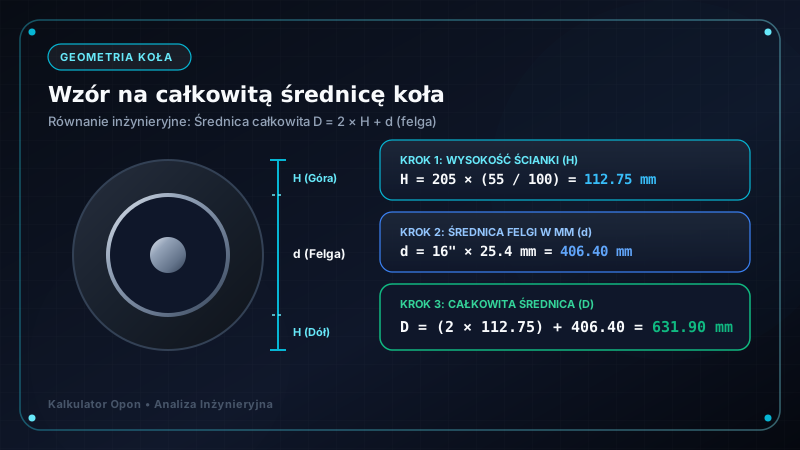
Here's jak obliczyć wysokość opony: multiply the width by the profile percentage. For our 205/55 R16 example, that's 205 × 0.55, which equals about 112.75mm. That number is your wysokość boku opony, also called sidewall height. It matters more than most drivers realize.
Jak sprawdzić średnicę całkowitą koła?
To find obliczyć średnicę koła, add the rim diameter to the sidewall height, twice over. Convert 16 inches to millimeters (about 406.4mm), then add 112.75mm twice. That gives you roughly 631.9mm total. This is your całkowita średnica koła.
This number matters for your speedometer, your ground clearance, and your obwód koła samochodowego. A wrong kalkulator średnicy koła result can throw off your car's electronics. Even a small error adds up over thousands of miles driven each year.
Jak znaleźć zamiennik dla obecnego rozmiaru?
Tires wear out. Sometimes your exact size isn't in stock. That's when you need dobór rozmiaru opon knowledge. A good kalkulator zamienników opon helps, but understanding the logic behind it helps even more.
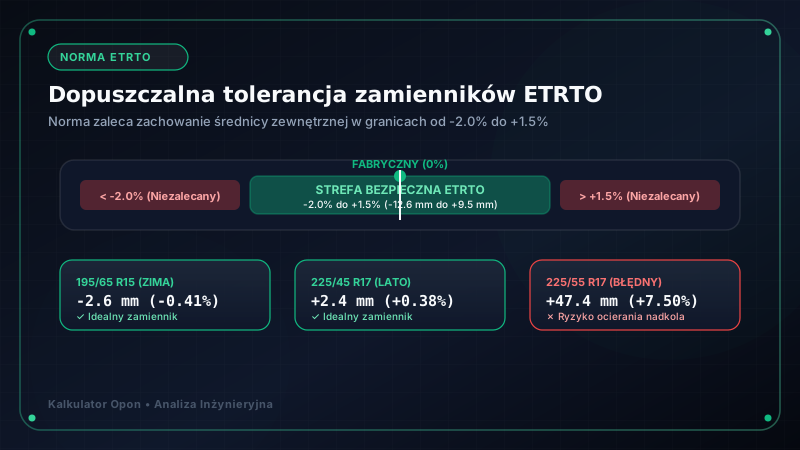
The golden rule for alternatywny rozmiar selection: stay within 2-3% of the original overall diameter. Go bigger and your speedometer reads slow. Go smaller and it reads fast. Either way, your dobór opony do felgi choice affects handling, braking, and even fuel economy over time.
Jak porównać dwa różne rozmiary opon?
A porównywarka rozmiarów opon makes this easy, but you can do it by hand too. Calculate each tire's diameter using the method above. Then compare the two numbers directly using simple subtraction.
Say you're comparing 195/65 R15 against 205/55 R16. Run both through the formula. The porównanie opon result shows you exactly how close they are. Most tires within the same "family" size range stay remarkably close in overall diameter, which is genuinely handy to know.
Jak obliczyć różnicę średnicy między rozmiarami?
Różnica średnicy between two tire sizes is just subtraction, then a percentage check. Subtract the smaller diameter from the larger one. Divide by the original diameter. Multiply by 100. That's your percentage difference, plain and simple.
Popular size swaps like 185/65 R15 to 195/60 R15, or 215/60 R16 to 225/55 R17, often land within safe range. But always verify your specific różnica średnicy koła before buying. A shop's kalkulator obwodu opony can double-check your math in seconds, which never hurts.
Jak sprawdzić, czy nowy rozmiar pasuje do samochodu?
Beyond math, physical fit matters. Check your fender clearance, suspension travel, and szerokość koła. A tire might calculate fine on paper but rub against your wheel well in real life. That's a costly, avoidable mistake.
Always check your door-jamb sticker for the rozmiar fabryczny opony your manufacturer recommends. This confirms kompatybilność opony before you commit. As one mechanic told a customer last year: "Math gets you close. The wheel well tells the truth."
Jakie parametry trzeba sprawdzić przed zmianą opon?
Before swapping to a rozmiar zamienny opony, check more than just size. The indeks nośności, or load index, tells you how much weight each tire safely carries. Don't skip this — it's tied directly to safety, not just comfort.
Next, check the indeks prędkości, or speed rating. It must match or exceed your vehicle's original spec. These parametry rozmiaru opony aren't optional extras; they're built into your car's safety engineering, so treat them with respect.
Common przelicznik rozmiaru opon sizes for compact cars include 145/65 R15, 155/70 R13, and 165/65 R15. Larger sedans often use 225/45 R17 or 235/45 R18. Sports and performance cars frequently run 245/40 R19, 255/35 R19, or even 275/35 R20.
Here's a quick tabela rozmiarów kół for reference across common vehicle classes:
Using a kalkulator opon samochodowych before purchase catches errors early. Building your own tabela zamienników opon for future reference also saves time down the road.
| Vehicle Type | Common Tire Sizes |
|---|---|
| Compact car | 175/65 R14, 185/60 R14, 195/55 R15 |
| Midsize sedan | 205/60 R16, 215/55 R17, 225/50 R17 |
| Performance car | 235/40 R18, 245/35 R19, 265/35 R20 |
Podsumowanie
Learning jak dobrać zamiennik opony doesn't require an engineering degree. Just remember the basics: width, profile, rim size, and overall diameter. Use a kalkulator rozmiaru koła whenever you're unsure, and always double-check parametry opony like load and speed index.
Whether you're comparing porównanie średnic on two sizes or hunting for the right alternatywny rozmiar opony, patience pays off. Measure twice, buy once — your car, your wallet, and your safety will thank you every single mile.